
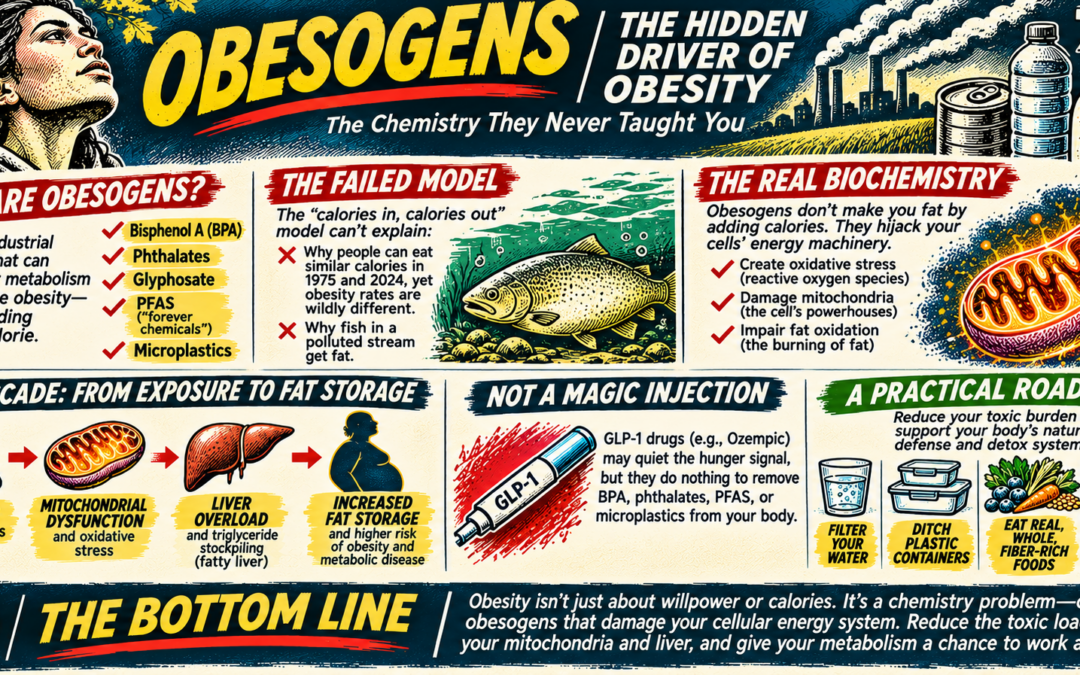
Obesogens: The Hidden Driver of Obesity
Obesogens: The Chemistry They Never Taught You
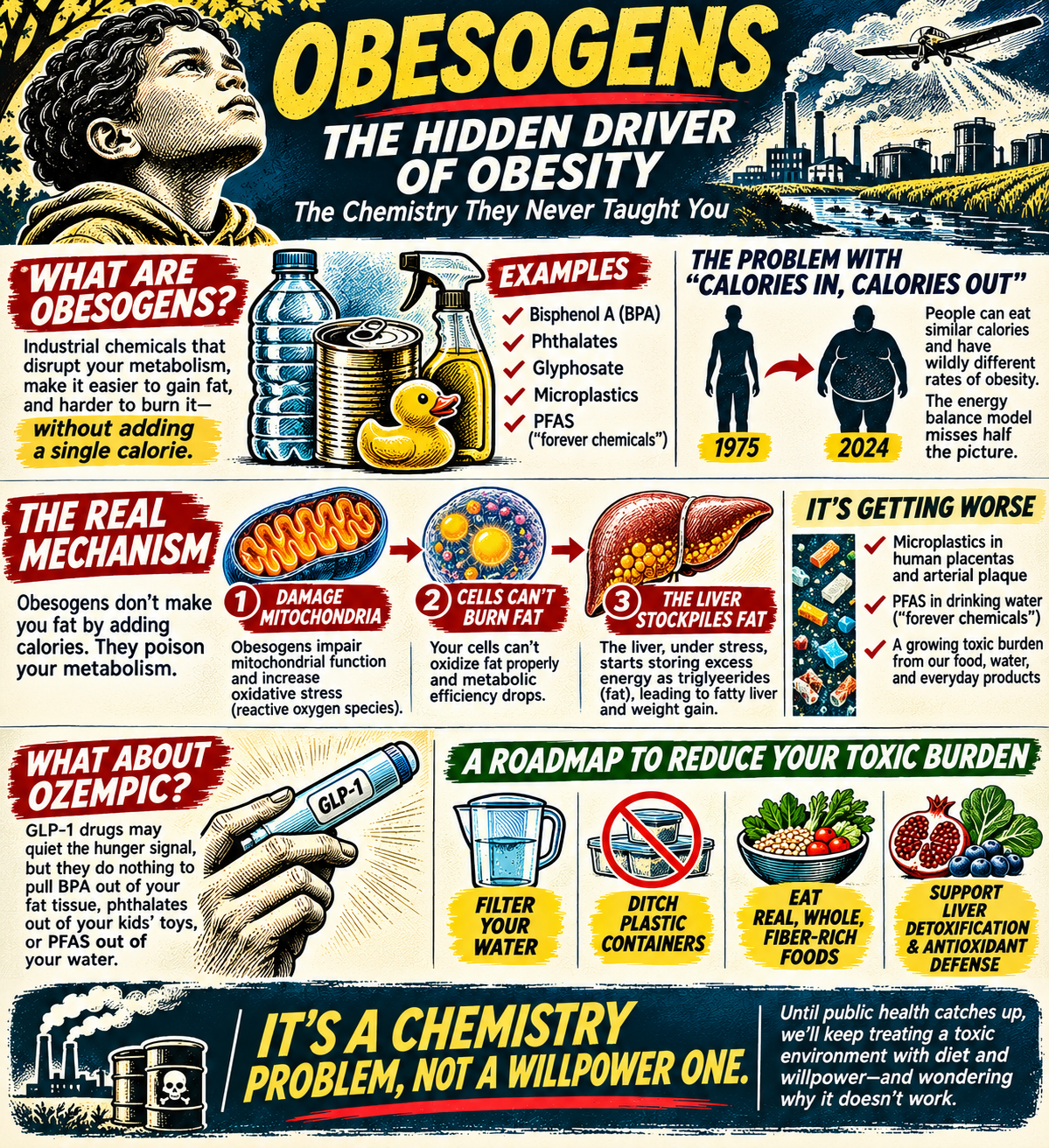
I sat down with Dom D’Agostino back in 2024 to talk about something that should terrify you more than the calorie counter on your treadmill: obesogens. Bisphenol A. Phthalates. Glyphosate. Chemicals you never voted for, sprayed on your food, leaching from the can lining your soup, sitting in your bloodstream doing something your endocrinologist was never trained to look for.
Here’s the central problem with the energy balance model (“calories in, calories out”) that’s been strangling obesity science for fifty years: it can’t explain why a population can eat the same number of calories in 1975 and 2024 and have wildly different rates of obesity. It can’t explain why fish in a polluted stream get fat. It misses half the picture. What doesn’t miss the picture is redox biology. Reactive oxygen species. Mitochondrial dysfunction. These obesogens don’t make you fat by adding calories — they make you fat by poisoning the machinery that’s supposed to burn the calories you already have. Your mitochondria choke, your cells can’t oxidize fat properly, and the liver, panicking and doing its best, starts stockpiling triglycerides. That’s a biochemistry problem, manufactured by an industrial chemical supply chain that has never once been asked to prove its products are metabolically safe.
Tie that to today, and nothing has gotten better. Arguably it’s gotten worse. Microplastics are now showing up in human placentas and arterial plaque. PFAS, the so-called “forever chemicals”, are in your drinking water whether your city admits it or not. Meanwhile the entire cultural conversation about obesity has been hijacked by Ozempic and its cousins, as if the answer to a toxic food and chemical environment is simply to suppress everyone’s appetite with a weekly injection. GLP-1 drugs may quiet the hunger signal, but they do nothing to pull bisphenol A out of your fat tissue or phthalates out of your kids’ toys.
The unifying theory Dom and I discussed is a roadmap of sorts. If obesogens damage mitochondrial function and drive oxidative stress, then the fix is reducing your toxic burden… filtering your water, ditching the plastic containers, eating foods (real, whole, fiber-intact foods) that support liver detoxification and antioxidant defense. Until the public health conversation catches up, we’ll keep treating a chemistry problem with a willpower solution and wondering why it doesn’t work.
Here’s our whole conversation, via an episode of “The Metabolic Link” podcast: Dr. Robert Lustig | Obesogens:… – The Metabolic Link – Apple Podcasts

Recent Comments